The 5 Leadership Formation Stages
Leadership does not form randomly. It grows through recognisable stages, and each stage asks something different of the person who leads.
This page is a map for leaders, founders, and serious seekers who want to understand where they are in their formation, what is being asked of them now, and whether the next step requires rhythm, counsel, or a deeper Quest.
When we study the lives of leaders across history, one truth becomes difficult to ignore: their growth was not random.
Human potential unfolds according to an order. Leadership formation has its seasons, tensions, tests, and moments of passage. A leader may feel lost when he does not understand the stage he is in. He may mistake temporary struggle for permanent failure. He may treat a deeper formation question as though it were merely a problem of effort, productivity, or confidence.
A map helps.
It does not remove the work. It does not make the passage easy. But it helps the leader locate himself. He can begin to see the strengths of his present stage, the challenge that is holding him, and the next form of maturity pressing to emerge.
This is where Self-Actualization Quest Counselling becomes most useful.
A true Quest returns the leader to responsibility with clearer sight. It is a structured process of stepping aside from the ordinary pattern so that the leader can see what must now be faced, released, chosen, and carried differently.
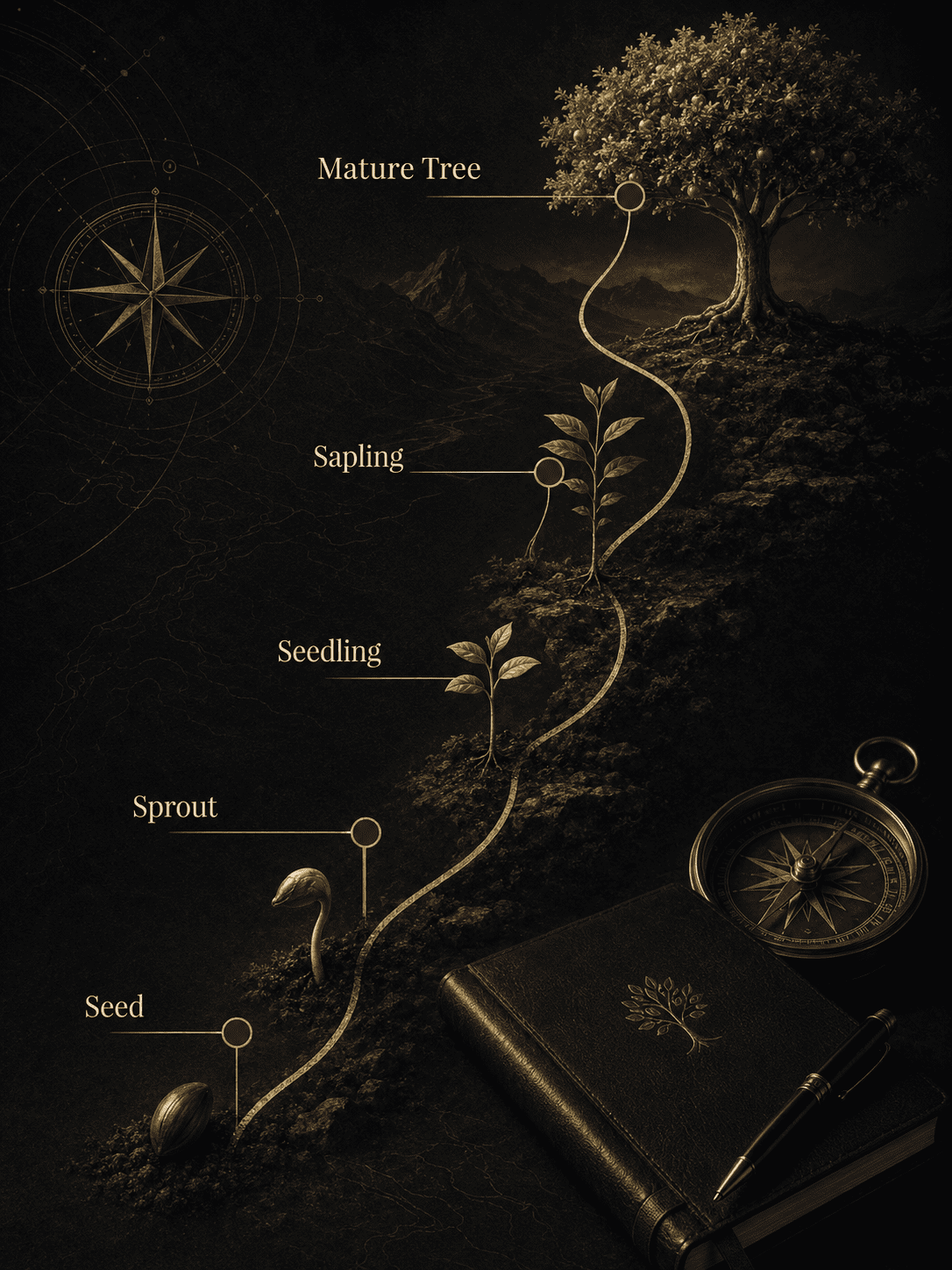
To understand the five stages, we will use the metaphor of a tree. For leadership, like nature itself, follows a living order of growth. The seed, the sprout, the seedling, the sapling, and the mature tree each reveal something about the formation of a leader.
A leader is not only building work. He is being formed by the way he carries it.
A person may spend years trying to solve the wrong problem.
He may think he needs more motivation when the real issue is calling. He may think he needs more confidence when the real issue is competence. He may think he needs more opportunities when the real issue is focus. He may think he needs to prove himself when the real issue is succession.
Each stage asks a different question.
The early leader must discover his calling and the environment in which he can grow. The developing leader must learn to direct himself and establish roots. The emerging leader must test his voice through practice and feedback. The productive leader must learn fruitfulness, priority, and disciplined focus. The mature leader must ask how the work can continue beyond him.
A leader becomes confused when he carries the questions of one stage into another.
He may try to be fruitful before he has accepted his calling. He may seek influence before he has learned self-leadership. He may imitate others instead of discovering his own voice. He may chase every opportunity when the real discipline is focus. He may continue expanding when the deeper question is legacy.
The stages are meant to lead to discernment, not endless self-analysis.
The leader must ask where he is now, what is being formed in him, what the present stage requires, what must be released, and what kind of help belongs to this moment.
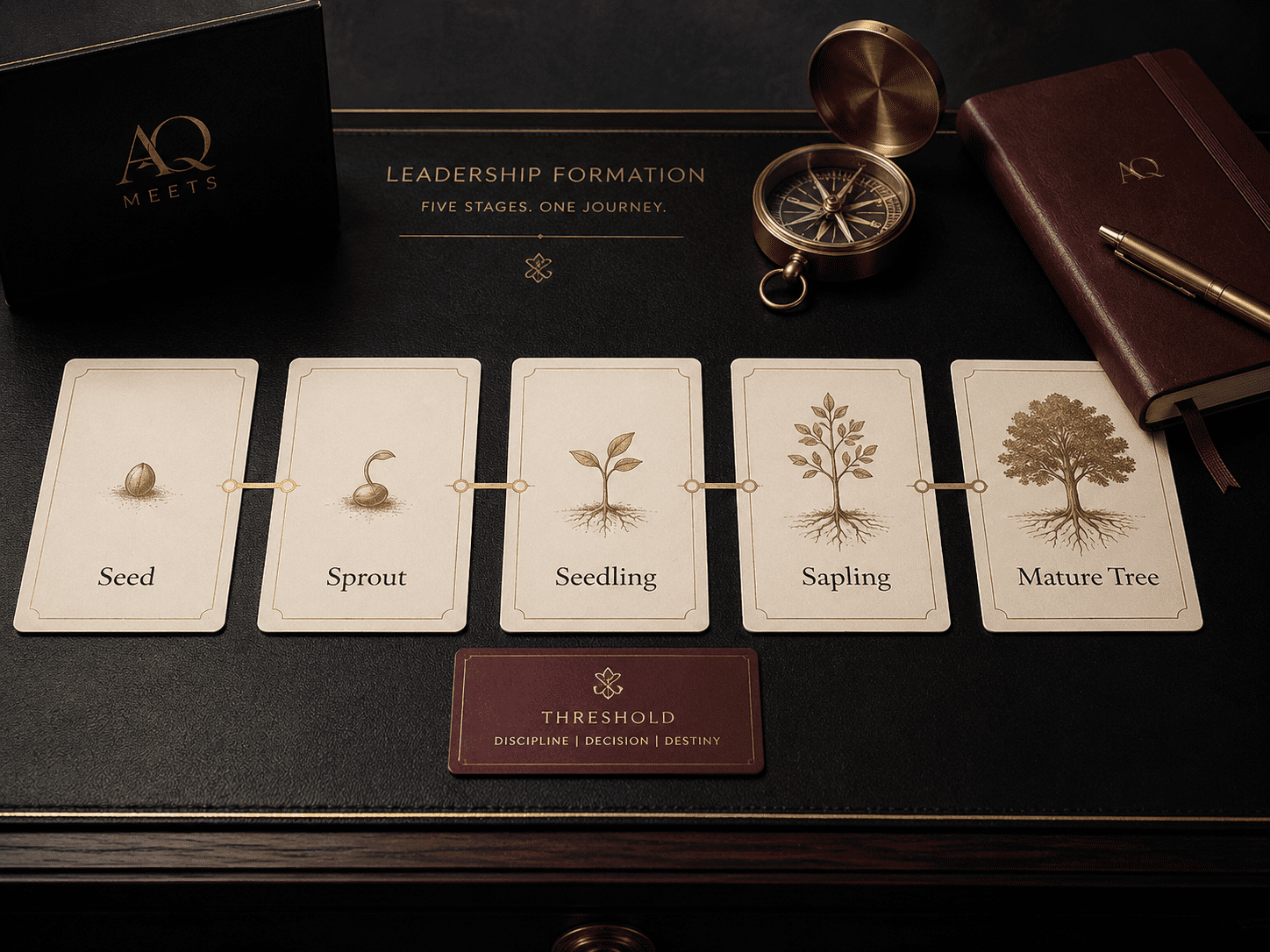
At times, the leader needs AQMeets. At other times, he needs Leadership Counselling. In a threshold season, he may need Self-Actualization Quest Counselling.
Latent Leadership: the hidden potential that has not yet become visible.
The word latent refers to something that exists within, but has not yet become developed, visible, or manifest.
This is the stage of the seed.
Every tree begins with hidden potential. Even the tallest tree begins in a small and concealed form. Within the seed there is an order, an energy, and a direction of growth. Its future is not yet visible, but the principle of that future is already present.
Leadership begins in the same way.
At the latent stage, the leader must begin to discover his own inner pattern: his strengths, interests, convictions, questions, formative experiences, and the early signs of calling.
These are not incidental details. They are part of the raw material from which a calling is recognised. A leader does not become great by escaping his story. He becomes formed by understanding it, elevating it, and bringing it into a higher order of service.
Yet potential alone is not enough.
A seed needs soil. It needs the right environment. It needs protection, moisture, light, and the conditions in which its hidden life can begin to move.

Many people with leadership potential remain undeveloped because they settle into the wrong soil. Their gifts are real, but the environment does not call them forth. Their story has meaning, but they have not yet understood how it belongs to a larger mission. They carry capacity, but have not yet chosen the path that would require it to awaken.
The challenge of this stage is calling and environment.
The latent leader must ask
- What is my true calling as a leader?
- What gifts, questions, and experiences keep returning?
- What kind of environment would allow this potential to grow?
- What soil is forming me now?
- What path must I choose if this seed is to break open?
A Self-Actualization Quest can become valuable here because it makes the question deliberate. Instead of waiting for chance, the leader steps aside to examine his calling, his environment, and the conditions required for growth.
This stage ends when the leader chooses a path. The seed cracks open. The sprout begins to grow.
At this stage, leaders often remain passive. They wait to be discovered, recognised, invited, or certain. The danger of the seed stage is undeveloped potential. The leader carries something real, but it remains buried.
A Quest at this stage helps clarify calling, environment, and commitment. It gives the leader a more deliberate way to ask what has been latent, what has been neglected, and what path now requires a response.
Self-Leadership: the first movement of root and shoot.
When conditions are right, the seed begins to germinate.
The shell breaks. Life begins to move. One part pushes downward into the soil, seeking water, nutrients, and anchoring. Another pushes upward, searching for light.
The sprout must grow in two directions at once.
So must the leader.
At this stage, leadership formation becomes self-leadership. The leader begins to learn how to govern himself. He develops the knowledge, skills, habits, attitudes, and disciplines that allow his calling to become more than desire.
The root represents grounding. The leader must learn. He must receive instruction. He must develop competence. He must accept correction. He must become strong enough inwardly to carry future responsibility.
The shoot represents aspiration. The leader must also reach upward. He must begin to test himself, move toward the light, and discover where his gifts may serve others.
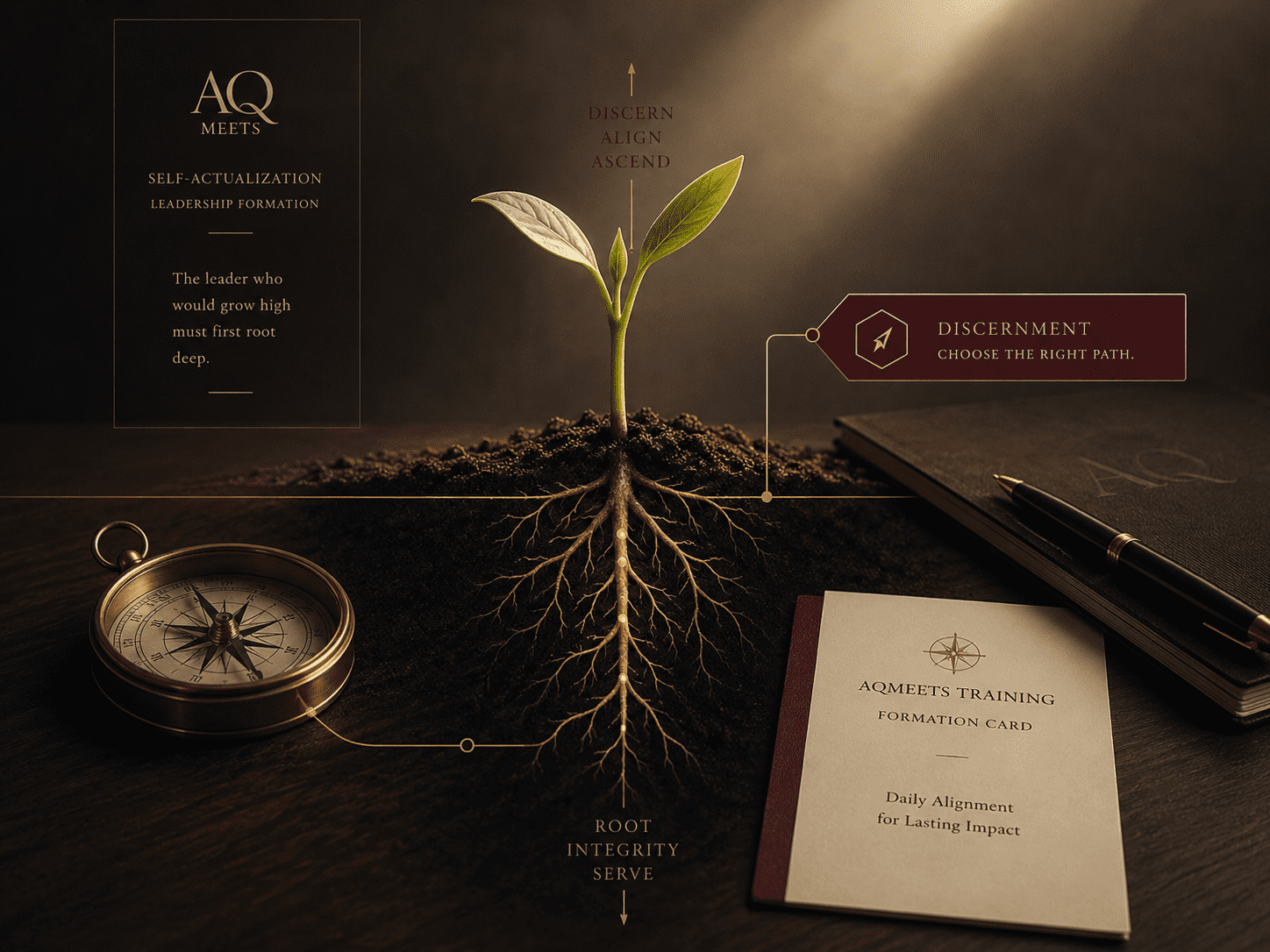
Both movements are necessary.
A leader with roots but no upward striving becomes safe but dormant. A leader with ambition but no roots becomes exposed, unstable, and easily scorched by pressure.
Self-leadership requires the leader to learn what is worth pursuing and how to direct himself toward it. This is the movement from potential into discipline.
Here the leader must demonstrate, first to himself, that he can stand.
The questions of this stage are practical and personal
- Where should I focus my gifts, skills, and efforts?
- Who am I called to serve?
- What kind of training or apprenticeship do I need?
- Can I trust myself to deliver with integrity?
- What habits must now become non-negotiable?
Many leaders get stuck here because the light is unclear. They lack direction. They try to grow in too many directions. They do not yet know whom they are called to serve. Or they doubt whether they can deliver what their calling requires.
Without light, the sprout weakens. With light, it begins to grow.
The trap of this stage is scattered formation. The leader has potential and desire, but no clear direction. He gathers information, starts and stops, changes focus repeatedly, and remains uncertain about his people, his service, and his capacity to deliver.
A Quest at this stage helps the leader clarify focus, tribe, training, and self-trust. It can help him establish a stronger root system and turn toward the light with more conviction.
Probationary Leadership: when training becomes visible through practice, feedback, and voice.
As the seedling emerges, it begins to resemble a young tree.
Leaves form. The stem strengthens. The first signs of structure appear. The seedling can now receive light more directly and convert it into energy for growth.
But this is also a vulnerable stage.
The seedling must compete for light, water, and nutrients. It must endure weather, crowding, insects, frost, and damage. Many seedlings never survive this passage.
In leadership, this is the probationary stage.
The leader steps into a real, though often limited, platform of influence. He begins to practise what he has learned. He serves real people. He receives real feedback. He sees what works, what fails, what strengthens others, and what still needs to mature.
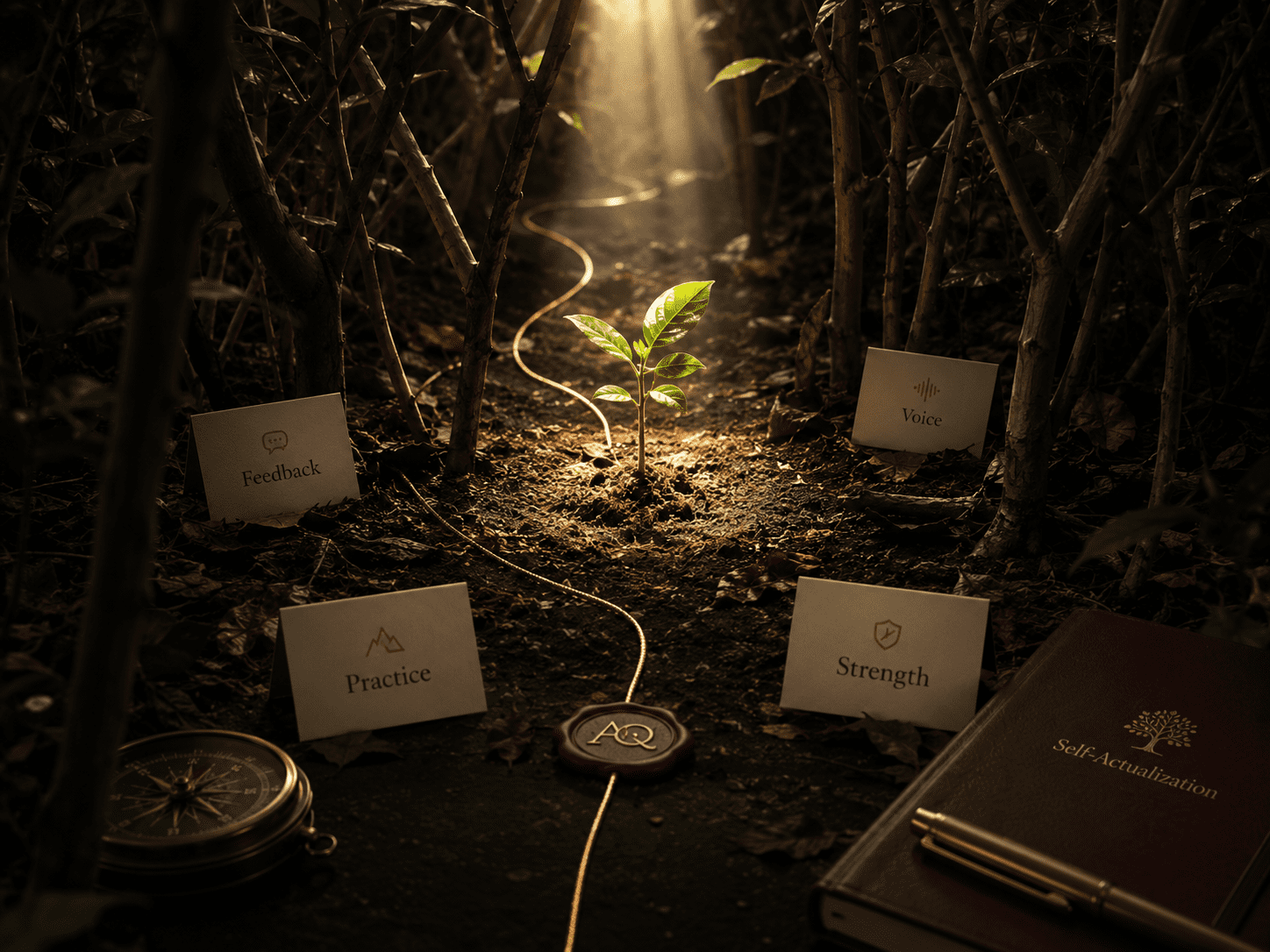
This stage is not merely about output. It is about recognition.
The leader begins to recognise his authentic voice. He discovers his signature strengths. He learns what kind of work carries life when it passes through him. He begins to see where his contribution makes a measurable difference.
This stage often feels unstable.
The leader can see more than he can yet produce. His vision may exceed his capacity. He may compare himself with more mature leaders and become discouraged. He may imitate a style that does not belong to him because his own voice is still forming.
Yet the feedback of this stage is necessary. The leader must be tested in relationship to reality. He must discover what is truly his. He must learn the difference between admiration and calling, comparison and craft, performance and contribution.
The questions of this stage are
- What is my unique voice as a leader?
- What strengths, when applied, make a real difference?
- Where does my contribution become most alive and useful?
- What feedback must I receive without becoming discouraged?
- What must I stop imitating in order to grow into my own form?
The wise leader resists the trap of comparison. Like an artist, he learns through practice, feedback, correction, and refinement. He does not become mature by copying the tree beside him. He becomes mature by growing into the form proper to his own life.
Many aspiring leaders give up at this stage because their output does not match their vision. They expected immediate fruit. Instead, they encounter vulnerability, inconsistency, criticism, and uncertainty. The seedling must survive long enough to become recognisable.
A Quest at this stage can help the leader clarify his authentic voice, refine his contribution, and recognise where his strengths create real value. It helps him stop competing for space and begin growing into the place only he can occupy.
Productive Leadership: when strength, focus, and fruitfulness begin to align.
As the young tree becomes a sapling, its structure becomes more visible.
Branches extend. Leaves multiply. The crown begins to form. The tree is not yet mature, but the architecture of its future is being established.
This is an energetic stage.
The sapling absorbs, expands, and grows quickly. It must endure repeated seasons. Spring, summer, autumn, and winter all work upon it. Its structure strengthens through exposure, rhythm, and time.
In leadership, this is the stage of productive formation.
The leader begins to exert his strengths upon his calling. The training of earlier stages consolidates into focus, momentum, and visible contribution. The leader starts to experience the fulfilment of work that is aligned with his gifts.

This is often the most productive phase of leadership development. But its danger is scattered growth.
The sapling must direct energy upward. If growth spreads in every direction without order, its structure weakens. In the same way, the productive leader must learn the discipline of priority.
Not every opportunity belongs to the mission. Not every invitation deserves attention. Not every possibility is a calling.
The leader at this stage must learn to say no with clarity, not out of fear, but out of fidelity to the work that matters most.
The central question is fruitfulness.
How can I generate the greatest good, with the least wasted effort, for the people I am called to serve?
This question brings the leader beyond activity. It asks for effectiveness. It asks whether effort, strength, opportunity, and mission are now being rightly ordered.
The supporting questions are
- Am I focusing my energy on what is most aligned with my strengths and mission?
- Do I have the discipline to say no so I can deliver at my best?
- Where am I confusing activity with fruitfulness?
- What structure must be pruned so that the true work can grow?
- What form of execution would allow my contribution to multiply without burning out?
At this stage, character matures alongside productivity. The leader begins to see that influence does not flow from appearance, image, or competition. It flows from integrity and depth of being. True productivity emerges when who the leader is and what the leader does begin to align.
Leaders often become exhausted at this stage because they mistake expansion for fruitfulness. They chase every emergent opportunity. They respond to every demand. They build a life of impressive activity while the central work becomes harder to protect.
A Quest at this stage can become especially powerful. By stepping away from everyday productivity, the leader can discern what matters most, which opportunities should be refused, and where his gifts best meet the world’s real need. AQMeets may also be especially useful here, because the leader needs a rhythm that turns intention into visible weekly proof.
Synergic Leadership: when the leader’s work bears fruit beyond himself.
In maturity, the tree becomes solid and enduring.
Its branches harden. Its bark thickens. Its fruit appears. Seeds disperse. The life of the tree begins to continue beyond itself.
At this stage, growth has reached a different kind of fullness. The tree does not merely strive upward. It stands. It shelters. It bears fruit. It contributes to an ecology larger than itself.
So it is with the mature leader.
Synergic Leadership is the integration of character, calling, competence, contribution, and community. The leader no longer acts as a solitary performer trying to prove capacity. His influence now works through relationship, culture, succession, and shared mission.
The whole becomes greater than the sum of the parts.
This is leadership at a high level of formation. The leader’s work radiates outward. It may extend beyond the original field in which he began. It may draw collaborators, successors, institutions, students, clients, partners, or communities into a larger order of contribution.

At this stage, the central challenge is no longer proof. It is continuity.
The leader must ask
- How will the vision I have cultivated continue after me?
- Who must be formed to carry this work further?
- What must be entrusted, released, or institutionalised?
- What part of my life’s work should become seed for others?
- How can the mission remain fruitful beyond my own direct control?
This stage requires humility.
The mature leader must accept that his work is not finally about himself. Fruit must become seed. Influence must become formation. Authority must become service to what can outlive him.
Mature leaders can become attached to control. They may remain central for too long. They may confuse their presence with the mission itself. The danger of the mature tree is fruit without seed.
A Quest at this stage helps clarify succession, legacy, and transcendent purpose. It gives the leader space to step back from direct activity and ask what must now be sown into the next generation.
Each stage asks for a different kind of maturity.
Latent Leadership
The challenge of discovering your unique DNA, calling, mission, gifts, and the environment in which your potential can grow.
Self-Leadership
The challenge of learning to lead yourself through training, discipline, focus, self-trust, and service to the right people.
Probationary Leadership
The challenge of finding your voice, refining your strengths, and learning through practice, feedback, and vulnerability.
Productive Leadership
The challenge of effective production: aligning strengths with opportunity, saying no to distraction, and becoming fruitful rather than merely active.
Synergic Leadership
The challenge of succession: ensuring the mission bears fruit beyond the leader’s own life, presence, or direct control.
These stages are not always perfectly neat.
A person may be mature in one area and still developing in another. A founder may be productive in business while still probationary in leadership voice. An executive may hold visible authority while privately facing a latent question about calling. A mature leader may need to return to the seed question when a new season begins.
The map is not meant to flatter or condemn. It is meant to help the leader locate himself truthfully.
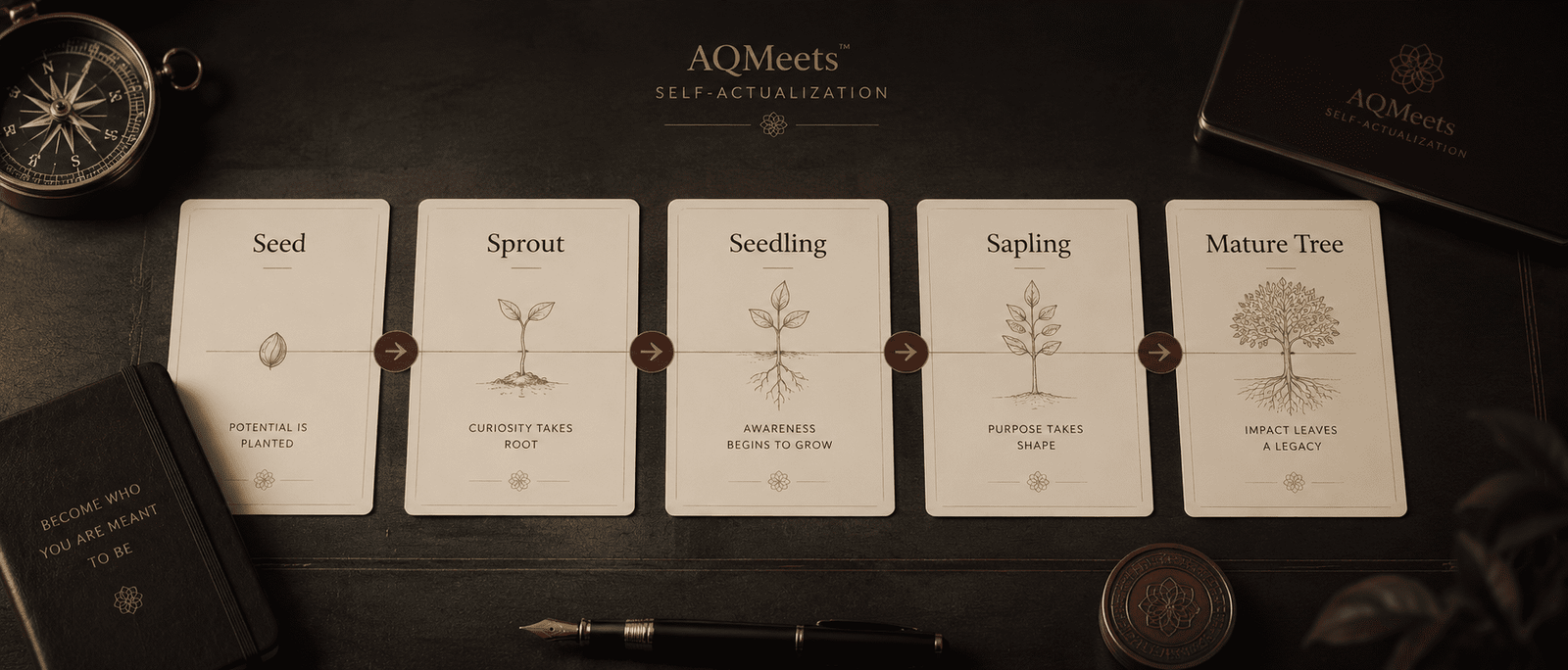
The admired stage may not be the present stage.
Every stage has dignity.
The seed is not a failure because it is not yet a tree. The sprout is not immature because it needs light and roots. The seedling is not weak because it is vulnerable. The sapling is not complete because it is productive. The mature tree is not finished because it bears fruit.
Each stage has its own work.
The danger is refusing the work of the present stage.
A person may want the fruit of maturity while avoiding the discipline of self-leadership. He may want recognition without probation. He may want productivity without pruning. He may want legacy without entrusting the work to others.
The real task is to locate where you are being formed now.
If one stage seems to describe where you are, the next step is not to rush into a programme. The next step is discernment.
Some leaders need a rhythm of review and correction. Some need private counsel around the burden they are carrying. Some need deeper Quest work because they are standing between stages and the old form no longer holds.
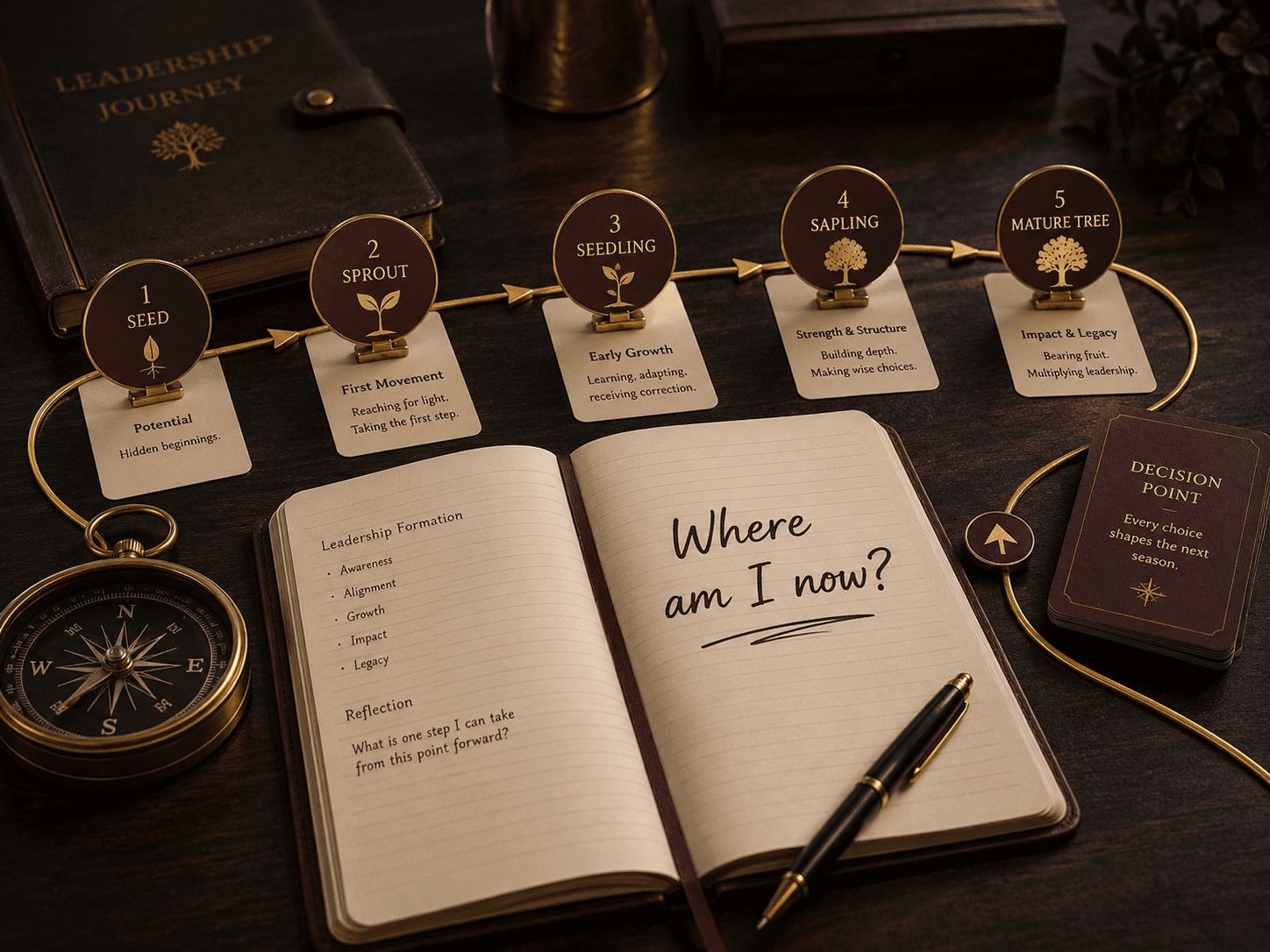
Reflection Prompts
- What stage best describes the question you are carrying now?
- What strength belongs to this stage?
- What danger or temptation belongs to this stage?
- What have you been trying to solve with the wrong kind of help?
- What would change if you accepted the work of this stage honestly?
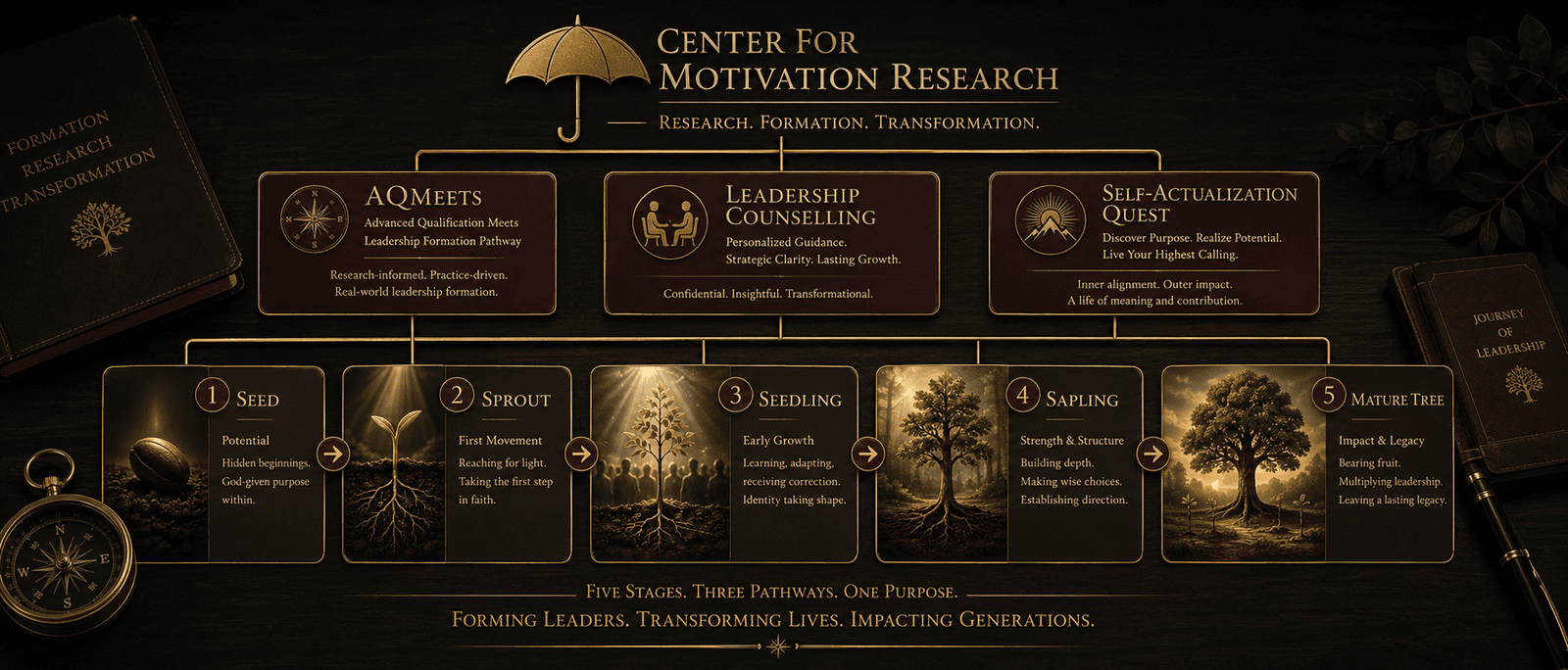
The Center for Motivation Research offers different pathways for different stages of need.
The stage you are in helps clarify the kind of help that may belong to the moment.
Some leaders need execution rhythm. Their meaningful work is not moving because intention is not being reviewed against reality. They need a disciplined weekly structure that makes drift visible and correction practical. This is where AQMeets may fit.
Some leaders need private counsel. The visible issue may be a decision, a relationship, a repeated pattern, or responsibility that has become difficult to carry alone. The question is not only what to do, but what the pressure is forming in the leader. This is where Leadership Counselling may fit.
Some leaders are standing at a threshold. The old form of work, identity, service, or leadership no longer holds. The leader is being asked to cross from one stage of formation into another. This is where Self-Actualization Quest Counselling may fit.
Every pathway serves a different kind of question. The work is to discern the pathway that belongs to the real question being carried.
Rhythm and proof
For leaders who need rhythm, review, correction, visible proof, and meaningful execution across the week, month, quarter, and year.
Private counsel
For leaders carrying private pressure, difficult decisions, repeated drift, weakened conviction, or responsibility that needs serious counsel.
Threshold work
For leaders standing at a threshold between stages, where the next movement requires reorientation, withdrawal, ordeal, and return.
If you recognise the stage, begin by discerning what it is asking of you.
A leadership stage is an invitation.
The seed must choose its soil. The sprout must grow roots and seek light. The seedling must endure vulnerability and discover its voice. The sapling must prune distraction and become fruitful. The mature tree must bear fruit that becomes seed for others.
The stage you are in will not be completed by admiration. It asks for a response.
You may need AQMeets because the work now requires rhythm, review, and proof.
You may need Leadership Counselling because the burden underneath your responsibility needs private counsel.
You may need Self-Actualization Quest Counselling because the old way no longer holds, and a deeper reorientation is being asked of you.
The first step is a discovery conversation.
That conversation listens carefully to the question you are carrying, helps locate the stage as honestly as possible, and discerns the pathway that belongs to this moment.